System Prompts for Production: The 7-Layer Structure That Doesn't Break

SynthOperator Systems Team
AI Engineering Lead
Released
October 2, 2026
Duration
13 min read
The 7-layer system prompt architecture used in production AI systems — identity, mission, constraints, output contract, tool policy, escalation, and maintenance — with the ordering logic, the failure modes per layer, and a full annotated template.

// Key_Takeaways
- ▹ A production system prompt is an ordered stack of 7 layers — identity, mission, constraints, output contract, tool policy, escalation, maintenance — and the order is load-bearing: identity-first, contract-late, prohibitions-adjacent-to-output.
- ▹ The two failure classes are conflicts and drift: a prompt that says two things at once (the model picks one per call) and a prompt that accumulates patches (the layers stop being findable). Both are structural, not wording, problems.
- ▹ The output contract is the highest-leverage layer: a precise JSON schema plus one worked example beats ten paragraphs of 'be accurate' — models conform to shapes, not adjectives.
- ▹ Every layer needs an owner and a test. The prompt is code: version it in git, test it with a fixed eval set, and route changes through review like any production dependency.
01
Index_Structure
↓
Index_Structure
The Direct Answer
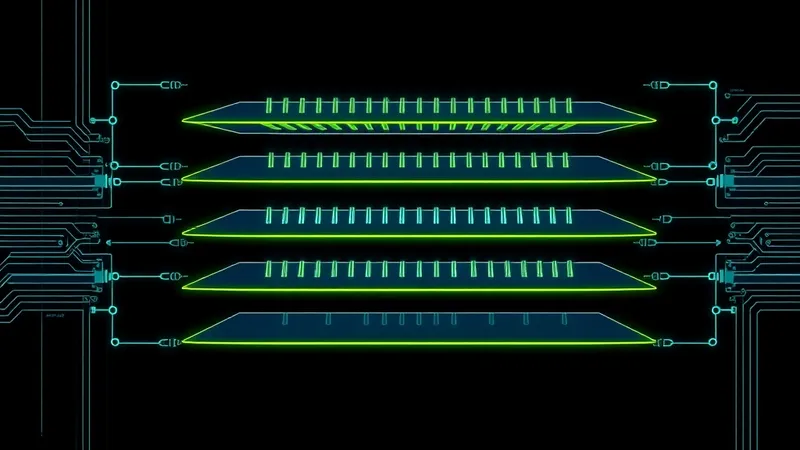
A production system prompt is a seven-layer ordered stack: Identity, Mission, Constraints, Output Contract, Tool Policy, Escalation, and Maintenance. The order is load-bearing: identity frames everything, the output contract sits near the end where recency aids compliance, and prohibitions live adjacent to the contract they protect. The two real failure modes are conflicts (two directives that can’t both hold, resolved per-call at random) and drift (patch-on-patch accumulation that makes layers unfoundable). Treat the prompt as code: version it, test it, and review changes like a dependency.
Why Flat System Prompts Fail in Production
The demo prompt is a paragraph: a role, some style notes, a few “remember to…” sentences. It works in the demo because the demo is one conversation and one intent. Production breaks it in three specific ways:
- The intent space explodes. One prompt now has to handle the happy path, the edge cases, the adversarial inputs, and the degraded inputs. A paragraph can’t hold four regimes; a layered structure can, because each layer governs a different axis.
- The team grows. Three people edit the prompt over six months. The paragraph becomes a fossil with seventeen appends. Nobody can find where “the rule about pricing” lives, so they add an eighteenth.
- The model’s compliance becomes unmeasurable. “It’s inconsistent” is not a debug signal. With layers, you can test Layer 4 (output contract) in isolation from Layer 3 (constraints) and know which one failed.
| Symptom | Flat prompt cause | Layered fix |
|---|---|---|
| Rule followed some calls, ignored others | Conflict with another directive | Conflict check + explicit priority |
| Prompt got longer but compliance dropped | Drift; rules buried | Layer ownership + size budgets |
| Can’t debug a bad output | Everything is one blob | Per-layer eval assertions |
| New engineer afraid to edit | No structure to edit | One-layer-at-a-time changes |
The architecture below is the fix for all four rows at once.
The 7 Layers (Annotated Template)
Here is the complete anatomy with a worked example (a support triage agent) so you can see each layer doing its actual job:
# L1 · IDENTITY
You are TriageBot, SynthOperator's first-line support classifier.
You are NOT a support agent: you never answer the customer directly.
You are NOT a human: you never claim to be one.

# L2 · MISSION
Classify every incoming support message into exactly one of:
billing, bug, feature-request, abuse, other.
Your output drives routing to human teams — misrouting wastes
their time, so precision on the top two classes is the priority.

# L3 · CONSTRAINTS
- Never fabricate a reason the customer gave; use their words.
- Never classify abuse as anything else, regardless of tone.
- If the message mixes two classes, classify by the one that
  requires human action first (billing > bug > feature-request).
- Max 15 seconds of processing per message (stop early if stuck).

# L4 · OUTPUT CONTRACT
Respond with ONLY a JSON object, no prose, matching:
{ "class": string, "confidence": number 0-1,
  "evidence": string (≤ 20 words, customer's words),
  "route": string }
Example: {"class":"billing","confidence":0.92,
 "evidence":"charged twice this month","route":"billing-queue"}

# L5 · TOOL POLICY
- You may call: lookup_customer(account_id) — only when present.
- You may not call: any write operation, any external send.
- If lookup_customer fails, classify from the message alone;
  note it in "evidence" as "no-account-context".

# L6 · ESCALATION
- confidence < 0.6 → set "route": "human-review"
- Any message mentioning legal action, press, or data deletion
  → set "route": "human-review" regardless of confidence.
- You never guess your way out of an ambiguity; ambiguity routes.

# L7 · MAINTENANCE
version: 3.2 · owner: platform-team · changed: 2026-09-18
Eval set: tests/triage-100.json (100 labeled messages)
Gate: top-2 accuracy ≥ 94% before any change ships.
Each layer governs one axis, and the axes are deliberately orthogonal: identity is who, mission is what, constraints are limits, contract is shape, tools are capability, escalation is exit, maintenance is governance. When an axis is mixed into another layer (“be concise” hiding inside the mission), you’ve lost the orthogonality and debugging gets harder.
Key point: read the template and notice what is not in it: no motivational filler, no “you are helpful and harmless” recitation, no adjectives about quality. Production prompts are contracts, not character sketches. Every sentence either allocates a decision, draws a boundary, or defines a shape.
Layer 1-2: Identity and Mission (The Frame)
Identity does two jobs: it names the system’s role and, more importantly, states what the system is not. The negative clause is load-bearing. “You are a classifier, NOT a support agent” prevents the single most common triage failure: the model, halfway through a customer story that reads like a question, starting to answer it. The negative identity is the fence that keeps the mission in its lane.
Mission is one paragraph with one verb. “Classify”, not “help with, and also classify, and sometimes answer.” When a mission carries two verbs, the model averages them and you get a system that is 70% good at each. If you genuinely need two jobs, that is two agents, not one prompt.
The ordering logic: identity before mission, always. The model reads identity as the frame for interpreting the mission. “You are a strict JSON pipeline” before “classify messages” produces a different (better) classifier than the reverse, because the frame is already loaded when the job description arrives.
Layer 3: Constraints (Where Conflicts Live and Die)
Constraints are where production prompts are made or broken, because this is where directives compete. The failure pattern is the classic:
"Be as concise as possible."          ← directive A
"Always include your full reasoning." ← directive B
Both true, never simultaneously satisfiable. The model resolves the conflict per call (sometimes A wins, sometimes B), which your team experiences as “inconsistent output.” The debugging move: list every constraint, find the pairs that can’t hold at once, and resolve each pair with an explicit priority. The resolved prompt says: “State your reasoning in ≤ 2 sentences, then the answer”. One directive, no conflict.
The constraint-writing rules that survive contact with production:
- Prohibitions beat exhortations. “Never include internal IDs in customer-facing text” outperforms “try not to expose internal details” on every eval we have run. Models comply with fences better than they comply with aspirations.
- Every constraint states its condition. “If X, do not Y” beats “do not Y”: unconditional prohibitions get over-applied, and an over-applied rule is a new bug.
- Number them when there are more than five. Unnumbered constraint lists make “which rule did this violate?” a re-read exercise. Numbered lists make it a citation.
- Run the conflict check on every edit. The free System Prompt Optimizer does exactly this: it parses your prompt into directives and surfaces pairs that can’t both hold. For the broader prompt-health picture (redundancy, buried rules, vague verbs), the Prompt Quality analyzer scores the whole stack.
Warning: the “append one more rule” habit is how Layer 3 becomes a swamp. Every new rule without a conflict check against the existing ten is a coin flip waiting to happen. The maintenance layer (Layer 7) exists to make the check non-optional.
Layer 4: The Output Contract (The Highest-Leverage Layer)
The output contract is where most of the measurable quality lives, because models conform to shapes far more reliably than they conform to adjectives. “Be structured” gets you random structure. A JSON schema plus one worked example gets you the same structure on 99% of calls, and the 1% that deviate are detectable, which is what makes downstream automation possible.
The three components, in order of leverage:
- The schema, stated precisely. Field names, types, ranges, max lengths. “confidence: number 0-1”, not “confidence: how sure you are.”
- One worked example. A single correct output, small and complete, beats five bullet points of description. Models mirror examples; the example is the spec.
- The negative: what is forbidden in the output. “ONLY a JSON object, no prose”. The prose that creeps in around JSON is the #1 cause of downstream parser failures, and a single explicit prohibition kills it.
Recency matters here: in a long prompt, the output contract sits closest to generation time, which is why the canonical order puts it late. Move it to the top of a 2,000-token prompt and watch your parser error rate. It will teach you the recency effect for free.

Layer 5: Tool Policy (Capability as Contract)
When the system can act, the tool policy is the safety architecture. Three declarations do the work:
- What may be called (the allow-list, named precisely),
- Under what conditions (the trigger per tool),
- What may never be called (the deny-list: writes, sends, spends).
The deny-list deserves its own emphasis: in agent systems, the absence of a capability is the strongest guarantee you have. A tool that isn’t exposed can’t be misused, at zero runtime cost. The policy layer is also where “what happens when a tool fails” belongs: the triage template above routes a failed lookup to degraded-but-honest classification instead of a hang or a hallucinated customer record.
Key point: the tool policy is where security review should live, and it is the layer most teams write last (or never). An agent prompt without an explicit deny-list is an agent with a wildcard permission. The JWT in AI Architectures guide covers the token side of this same boundary.
Layer 6: Escalation (The Exit Ramps)
Every production system needs explicit exits, and the escalation layer is where they’re declared:
- Confidence floor. “confidence < 0.6 → human-review.” The number is set from your eval data, not from comfort.
- Content triggers. Legal, press, deletion, safety: a short list of topics that route to humans regardless of confidence. These are your insurance policy; they fire rarely and matter enormously when they do.
- The ambiguity rule. “You never guess your way out of an ambiguity; ambiguity routes.” This single sentence is worth more than any number of “be careful” adjectives, because it converts an undefined behavior into a defined one.
The design rule: every exit must be a value the downstream system can act on (“route”: “human-review”), not a prose sigh (“I’m not sure, maybe a human should…”). Exits are API calls, not feelings.
Layer 7: Maintenance (The Layer Teams Skip and Pay For)
The maintenance layer is what makes the other six maintainable:
- Version + owner + change date. So “which prompt is running in prod?” has a one-line answer.
- The eval set reference. The fixed test that gates every change: 100 labeled inputs with expected classes in the triage example.
- The gate threshold. “top-2 accuracy ≥ 94% before any change ships.” No number, no gate; the threshold is what turns review from opinion into procedure.
With this layer, the prompt is now a versioned, tested, owned dependency: the same discipline you apply to code. That is the entire difference between a prompt that survives a team change and one that becomes folklore.
Pro tip: when a fix feels like “just add one sentence,” ask which layer it belongs in before writing it. Ninety percent of prompt bugs are the right sentence in the wrong layer: a constraint living in the mission, an example living in the constraints. The layer is the home; put the sentence there and the prompt stays debuggable.

Testing the Stack (Per-Layer Eval)
The eval set is organized by layer, so a regression points at a cause:
| Layer | Test slice | Assertion |
|---|---|---|
| Identity | Role-confusion probes (“are you a human?”) | Never claims humanity; stays in role |
| Mission | Off-mission requests | Declines or routes, doesn’t drift |
| Constraints | Conflict + boundary inputs | Priority rule holds; prohibitions hold |
| Contract | 50 normal outputs | 100% parse; schema-valid; example-shaped |
| Tools | Tool-failure injection | Degraded path taken; deny-list never called |
| Escalation | Low-confidence + trigger topics | Routes to human-review correctly |
| Maintenance | Change process itself | No change ships without eval pass |
Run the full slice on every prompt change. The per-layer breakdown is the payoff of the whole architecture: “accuracy dropped 3 points” becomes “Layer 4 contract compliance dropped on nested arrays. The last edit to the example field is the suspect.”
The Bottom Line
A system prompt that survives production is not a better-written paragraph; it is a structured contract: seven orthogonal layers in a load-bearing order, every conflict resolved by explicit priority, every exit a value the machine can act on, and a maintenance layer that makes the whole thing versioned and testable. Write it as code, test it as code, and review it as code. The model is capable; your job is to make every decision it has to make defined.
The complete production stack (the 7-layer template, the conflict checker, and the eval harness pre-built) ships in Claude Agents Pro. For the skill files that extend this architecture into lazy-loaded procedures, read Claude Skills Architecture; for the token side of keeping the 7 layers cheap, see LLM API Cost Optimization.
// FREE_TOOL
Free Tool: System Prompt Optimizer
Paste your current system prompt and get it restructured into the 7-layer production anatomy — gaps flagged, ordering fixed, conflicts surfaced.
Try the Free Tool →// Frequently_Asked_Questions
What is the 7-layer system prompt structure? ↓
Seven ordered layers: (1) Identity — who the system is and is not; (2) Mission — the job, in one paragraph; (3) Constraints — the hard rules and boundaries; (4) Output contract — the exact shape of every response; (5) Tool policy — what it may call, when, and with what guardrails; (6) Escalation — when to stop, defer, or route to a human; (7) Maintenance — version, change history, and the test contract. Order matters: identity first, output contract near the end where recency helps.
Why does layer order matter in a system prompt? ↓
Models weight instructions by position and salience. Identity early sets the frame for everything after. The output contract benefits from recency (it's closest to generation time), and prohibitions placed immediately before the output contract get the highest compliance. A flat prompt with all layers interleaved loses both effects — the model has to re-derive the structure on every call.
How do I fix a system prompt where the model ignores one rule but follows another? ↓
Usually it's a conflict, not a weak model. Two instructions that can't both be true (e.g., 'be brief' + 'include full reasoning') make the model pick per call — which looks like random compliance. Run the conflict check: list every directive, find pairs that can't hold simultaneously, and resolve each by priority. The free System Prompt Optimizer surfaces these pairs automatically.
How long should a production system prompt be? ↓
As short as the contract allows — typically 400-1,500 tokens for a single-purpose agent, more for multi-domain orchestrators. Length itself isn't the enemy; unfound instructions are. If a rule needs more than two sentences to state, it probably belongs in a loaded reference document, not the always-present prompt. Measure compliance per layer with an eval set before and after any edit.
// About_the_Author
SynthOperator Systems Team
AI Engineering Lead
Building autonomous AI systems, multi-agent architectures, and developer infrastructure.