JWT in AI Architectures: How to Inspect, Rotate, and Protect Agent Tokens

SynthOperator Systems Team
Data Engineering Lead
Released
October 2, 2026
Duration
13 min read
Why AI agent architectures need a token discipline of their own: inspecting JWTs safely, the three failure modes (leak, expiry, over-privilege), rotation patterns for long-running agents, and the inspection checklist before a token ever reaches an LLM.

// Key_Takeaways
- ▹ JWTs are base64url-encoded, not encrypted: anyone who sees the token can read the payload, so a JWT that reaches an LLM context, a log, or a prompt has already leaked its claims.
- ▹ The three failure modes in AI architectures: leak (token in context/logs/prompts), expiry (long-running agents outliving their tokens), and over-privilege (agent tokens carrying more scope than the task needs).
- ▹ Long-running agents need a rotation pattern, not a longer TTL: short-lived tokens (minutes, not days), a refresh step in the workflow, and expiry-check-before-use as a first-class node.
- ▹ Never feed a raw token to an LLM: decode it, keep only the non-sensitive claims (subject, scope, expiry) in context, and validate the structure with a schema before any downstream use.
01
Index_Structure
↓
Index_Structure
The Direct Answer
AI agent architectures need a token discipline that traditional apps skip: inspect JWTs safely (decode, keep only non-sensitive claims, never put the raw token in an LLM context or log), design around expiry (short-lived tokens plus a refresh node, not 24-hour tokens and hope), and scope by mission (each agent gets the minimum scopes its task needs). The three failure modes (leak, expiry, over-privilege) are all architectural, all preventable, and all silent until the day they’re not.
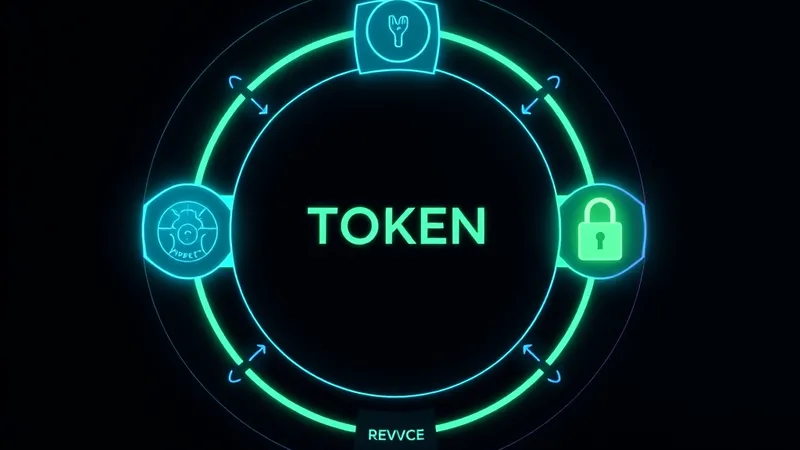
Why AI Architectures Change the JWT Problem
In a conventional API, a JWT moves through infrastructure you control: your gateway verifies it, your service uses it, your logs redact it. The token’s lifecycle is a closed loop.
An AI agent architecture breaks the closed loop in four specific ways:
- Context is a new surface. The token’s claims, or the token itself, can end up in an LLM context: in a prompt, in a tool result, in a conversation history that gets re-sent for days. Context is readable by the model, by the provider’s pipeline, and by anyone with log access.
- Logs are noisier by default. Agent workflows log everything to debug the model’s behavior, including tool inputs and outputs, which is exactly where tokens travel.
- Jobs outlive sessions. A batch agent running 14 hours will outlive a 1-hour token. Human-triggered apps don’t have this problem; autonomous pipelines do.
- The “user” is a model. A human who holds a token knows not to paste it into chat. A model that sees a token in a tool result will happily echo it into its next output. That is literally what models do.
| Surface | Traditional app | AI agent architecture |
|---|---|---|
| Who reads the token | Your code | Your code + the model + the provider pipeline |
| Where it gets logged | Redacted gateway logs | Full tool inputs/outputs, by default |
| Lifetime pressure | Session (minutes) | Batch job (hours) |
| Who handles it | Auth middleware | Workflow Code nodes (easy to get wrong) |
The fixes are the same primitives (decode, verify, rotate, scope), but they have to be wired into the workflow, because the model will not be your security boundary. It is, by design, a component that repeats what it sees.
Key point: the model is not a confidant. An LLM in your pipeline is a very capable parrot with a probability distribution. Anything that enters its context can leave it. Token security in AI architectures means assuming context is public and engineering backwards from that assumption.
The Anatomy of a JWT (Know What You’re Inspecting)
A JWT is three base64url-encoded segments joined by dots:
eyJhbGciOiJIUzI1NiIsInR5cCI6IkpXVCJ9.eyJzdWIiOiJhZ2VudC13b3JrZXIiLCJzY29wZSI6InJlYWQ6Y3VzdG9tZXIiLCJleHAiOjE3NjAwMDAwMDB9.s1H37p6a...
└────────── header ──────────┘  └───────────── payload ─────────────┘  └─ signature ─┘
Decode the first two in your head (they’re base64url):
// header
{ "alg": "HS256", "typ": "JWT" }

// payload (claims)
{
  "sub": "agent-worker",
  "scope": "read:customer",
  "iss": "https://auth.synthoperator.com",
  "exp": 1760000000,
  "iat": 1759999340
}
Three facts drive the entire security model:
- The payload is readable by anyone. Base64url is an encoding, not encryption. There is no secret in “the token”. The only secret is the signature key, and the signature only proves origin, not confidentiality.
- The signature is not a lock. Verification (checking the signature against the issuer’s key) proves the issuer signed this exact payload. It does not make the payload private. An attacker who can read the payload can copy the claims; they just can’t forge a new one.
- Expiry is a timestamp, not a mechanism.
expis a claim that your code must enforce. Nothing in the token format stops a late check. In agent workflows, the enforcement is a Code node. A missing Code node is a missing security control.
The practical consequence: a JWT in your system is data you must handle like PII, plus a credential you must handle like a password. Two handling regimes, one string.
You can see all three segments live, in the browser, with nothing uploaded, using the free JWT Decoder, the first step of the inspection protocol below and the tool we keep on hand whenever a token’s shape looks off.
Failure Mode 1: The Leak (Token in Context, Log, or Prompt)
The leak is the most common failure because the path is so easy: a tool returns an authenticated response, the token rides along in the headers or body, the workflow logs the tool output for debugging, and now the token is in a log table, a Postgres row, or, worst case, the next LLM prompt.
The detection habit: grep your workflow logs for the JWT shape. Three dots with base64url chunks is a very greppable pattern:
# find JWT-shaped strings in workflow logs
grep -rEo '[A-Za-z0-9_-]{10,}\.[A-Za-z0-9_-]{10,}\.[A-Za-z0-9_-]{5,}' logs/ | sort | uniq -c | sort -rn
Any hit is an incident to triage, not a curiosity to note.
The prevention pattern, in four nodes:
- Strip at the tool boundary. The Code node immediately after any authenticated tool call redacts tokens from the output before it continues: headers removed,
Authorizationscrubbed, anytoken/access_tokenfields replaced with[REDACTED]. - Claims, not tokens, in context. When the model needs to know about the caller (whose data, what scope), pass the decoded non-sensitive claims:
{ "subject": "agent-worker", "scope": "read:customer", "expires_in": 312 }. The model gets the information; the credential never enters context. - Redact in the logging layer, not just the code layer. The log sink itself applies the JWT-shape scrubber from above, so a future tool that forgets to redact doesn’t become an incident.
- Rotate on suspected leak. If a token has entered a log or context you can’t fully recall, treat it as burned: revoke and reissue. “It probably wasn’t seen” is not a security posture.
Warning: the classic trap is the debug prompt. Someone pastes a real tool response, token and all, into a prompt to make the model “explain what happened.” One paste, and the token is in the conversation history, re-sent on every subsequent turn. The rule: debug with fixtures, never with live tool outputs.
Failure Mode 2: The Expiry (Agents Outliving Their Tokens)
The second failure is quieter: the agent runs, the token expires at hour two, the job fails at hour three. Or worse, a retry at hour three uses the expired token, fails, retries again, and the execution history fills with the same 401.
The pattern that removes the failure class entirely: short tokens + refresh node + pre-use check.
// token-guard.mjs — run before every authenticated call
const MARGIN_SEC = 60; // refresh 60s before actual expiry

function tokenStatus(token, nowSec) {
  const payload = decodeJwTPayload(token); // base64url decode of segment 2
  const exp = payload.exp;
  if (!exp) return { state: 'no-exp', action: 'reissue' };
  const remaining = exp - nowSec;
  if (remaining < 0) return { state: 'expired', action: 'refresh' };
  if (remaining < MARGIN_SEC) return { state: 'expiring', action: 'refresh' };
  return { state: 'ok', action: 'use', remaining };
}
The workflow shape:
[authenticated task]
  → [Code: tokenStatus(token, now)]
      ├─ ok        → [proceed with the call]
      ├─ expiring  → [refresh token → re-check → proceed]
      ├─ expired   → [refresh → proceed]   (one refresh attempt)
      └─ refresh fails → [stop the job, alert, never retry-loop on 401]
Three rules:
- TTL in minutes, not days. A 15-minute token limits the blast radius of a leak to 15 minutes. A 24-hour token limits it to a day, and in a batch pipeline, “a day” is how many jobs ran with the leaked token.
- The refresh is idempotent and bounded. One refresh attempt per expiry; a failing refresh stops the job loudly. The retry-loop-on-401 is how a token problem becomes a cost problem (every retry re-bills the LLM steps that precede the call).
- Log the refresh events. A spike in refreshes is a signal: a misconfigured TTL, a clock drift on the worker, or (less hopefully) something probing your token endpoint.
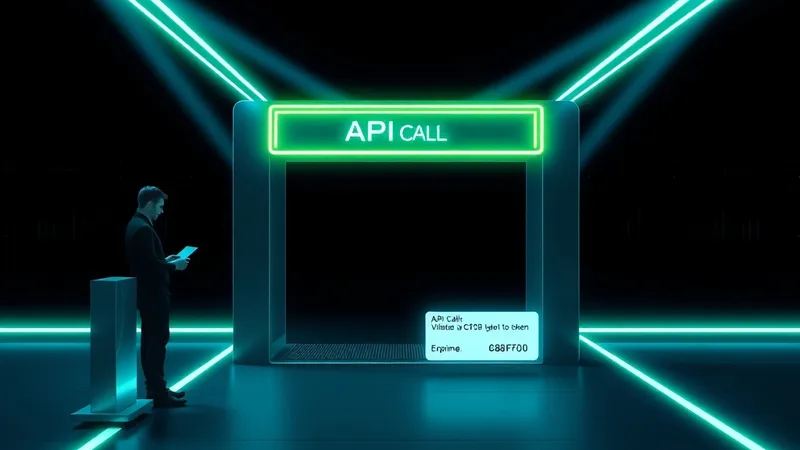
Failure Mode 3: Over-Privilege (Tokens With More Scope Than the Mission)
The third failure is the one that turns an incident into a compromise. The agent was built for “read customer records,” and the token it runs with can write orders, because that’s what the shared service credential allowed.
The fix is scoping by mission, and the mission is defined in the agent’s system prompt, which means the token scope should be derived from the prompt’s Layer 2:
| Agent mission (from its system prompt) | Minimum scope |
|---|---|
| Classify support messages | read:messages |
| Extract from invoices | read:documents |
| Generate client reports | read:warehouse |
| Post to social (gated) | write:social — plus the Human Gate |
The engineering pattern:
- One credential per agent mission, not per team. The shared “pipeline service account” is the over-privilege factory. Each mission gets its own identity with its own minimal scopes.
- Write scopes require a gate. Any token with a write scope is only usable behind the Human Gate pattern (approval before the irreversible action). Read is low-stakes; write is not, and the architecture should make that asymmetry physical.
- Re-audit scopes monthly. Missions drift; scopes don’t (nobody removes a scope). A monthly pass (“does each agent still need what its token can do?”) catches the drift before it becomes an incident.
The structural check that makes this auditable: validate the token’s claims against a schema before the agent starts. The free JSON Schema Validator is the right tool for the shape-check; in the pipeline, the same check is a 10-line Code node that fails the job if the scope is wider than the mission’s allow-list.
Key point: over-privilege is the only failure mode where the system looks fine. The token works, the job runs, nothing is logged as wrong, until the day the leak (Failure 1) and the privilege (Failure 3) meet. Security in agent architectures is about the intersection, and the intersection is scoped tokens.
The Pre-LLM Inspection Checklist (Run Before Context)
Before any token-derived data enters an LLM context, it passes this checklist. It is the “decode, don’t feed” rule made operational:
- Decode, don’t feed. The raw token string never enters context. Decoded, selected claims only.
- Select the minimum claims. Subject, scope, expiry: the three the model actually needs to reason about the caller. No
jti, no internal IDs, no issuer metadata the task doesn’t use. - Verify at the trust boundary. The token was signature-verified when it entered your system (gateway, ingress node). Context-side code does not re-verify. It consumes verified facts.
- Expiry-checked with margin. The pre-use check (Failure 2 pattern) ran and passed, with a ≥60s margin.
- Schema-validated the claims. The claims object matches the expected shape (types, required fields). A malformed claim object is a data-integrity bug, not a model problem.
- Redaction confirmed downstream. The logging path for this context has the JWT-shape scrubber active.
The checklist is short because the design does the work: if the token never enters context, the checklist mostly confirms the architecture held. That is the point. Security that requires a human to remember a step on every call is not security, it’s a lottery.
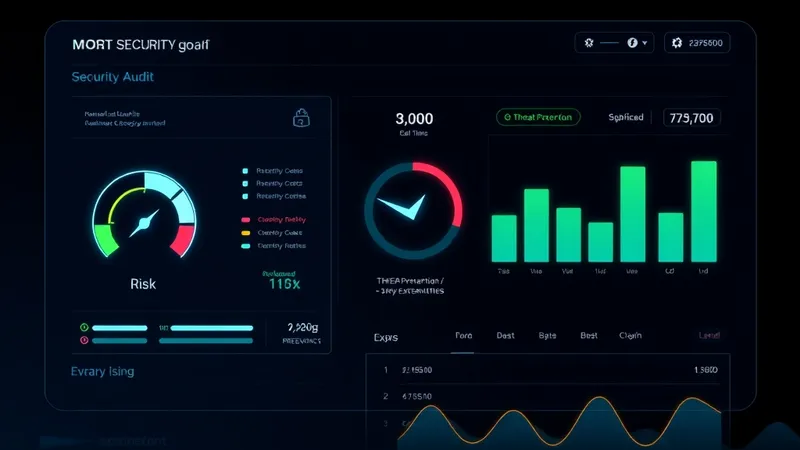
The Rotation Pattern for Long-Running Agents (Complete)
Assembling the three fixes into one pattern. This is the shape we deploy for any agent that runs longer than its token TTL:
[agent job start]
  → [issue short-lived token (TTL 15m, mission-scoped)]
  → [loop: each authenticated step]
       → [Code: tokenStatus + margin check]
       → [refresh if expiring/expired (bounded: 1 attempt)]
       → [execute step with the token (token stays in the credential slot)]
       → [Code: strip + claims-extract for any context use]
       → [log with JWT-shape scrubber]
  → [job end]
       → [revoke token immediately (don't wait for natural expiry)]
       → [log: refresh count, max remaining-margin seen]
The operational details that separate this from a toy:
- Revocation at end-of-job is mandatory. A finished job’s token should be dead. If your issuer doesn’t support explicit revocation, the TTL must be short enough that “finished but still valid” is under a few minutes.
- The refresh count is a health metric. A job that refreshes 40 times is a job with a 15-minute TTL doing a 10-hour run: fine. A job that refreshes 40 times in 20 minutes has a clock problem or a token-size problem, and both are bugs, not noise.
- Alert on the 401 pattern. One 401 per job that recovers via refresh: expected. A 401 after a successful refresh: the refresh returned a bad token, which is an issuer problem. Alert immediately, don’t retry-loop.
The Bottom Line
JWTs in AI architectures fail in three specific ways (into context, past expiry, beyond scope), and all three are architectural, not accidental. Decode instead of feed, refresh instead of hope, scope instead of share. The model in your pipeline will repeat anything it sees, outlive any token you hand it, and use any privilege you grant it. Design the token’s lifecycle like the model is the threat model. In the places where context, logs, and prompts meet, functionally, it is.
The full agent security stack (short-lived mission-scoped tokens, the refresh node, the context redaction layer, and the pre-LLM checklist as a reusable sub-workflow) ships inside Claude Agents Pro and the n8n Automation OS. For the prompt-side boundary these tokens protect, read System Prompts for Production: The 7-Layer Structure; for the MCP layer where agent credentials actually connect, see Claude Code Subagents.
// FREE_TOOL
Free Tool: JWT Decoder
Decode any JWT's header, payload, and signature structure in your browser — no server round-trip, nothing uploaded. The first step of the inspection protocol below.
Try the Free Tool →// Frequently_Asked_Questions
Is a JWT safe to include in an LLM prompt or context? ↓
No. A JWT is base64url-encoded, not encrypted — the payload is fully readable by anyone who sees the token, including the model provider's infrastructure, your logs, and anyone with context access. The safe pattern is to decode the token, extract only the non-sensitive claims you need (subject, scope, expiry timestamp), and put those — not the token — into context. The token itself stays in your secret store or workflow credential slot.
How do I handle token expiry in long-running AI agents? ↓
Use short-lived tokens (5-15 minutes) with a refresh step in the workflow, and treat 'expiry check before use' as a first-class node: before any authenticated call, a Code node compares the token's exp claim against the clock plus a safety margin and triggers a refresh when the margin is under. Designing around the expiry — instead of hoping a 24-hour token outlives the job — removes the entire failure class.
What's the difference between decoding and verifying a JWT? ↓
Decoding reads the payload (base64url decode — no key needed, reveals everything). Verifying checks the signature against the issuer's public key (proves the token was actually issued by that issuer and not tampered with). In AI architectures, your code should verify at the trust boundary (when the token enters your system); the LLM context should only ever see decoded, non-sensitive claims. Never treat a decoded-looking token as authentic without verification.
What scopes should an AI agent's token have? ↓
The minimum set the task needs, per task. A support-classification agent needs read on customer records and nothing else; a reporting agent needs read on the warehouse and no write anywhere. The rule: scope by the agent's mission (its system prompt's L2 layer), never by convenience. Over-privileged agent tokens are the difference between a contained leak and a full account compromise.
// About_the_Author
SynthOperator Systems Team
Data Engineering Lead
Building data pipelines, scraping infrastructure, and automation systems for agencies and SaaS teams.