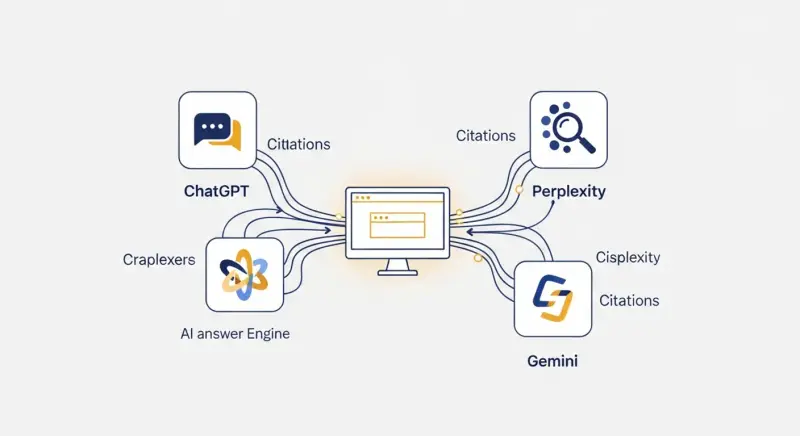
7 Underrated AEO Tactics That Actually Get You Cited by AI in 2026

SynthOperator Systems Team
AEO Strategy Lead
Released
July 21, 2026
Duration
9 min read
Getting cited by ChatGPT and Gemini isn't about keywords. It's about positioning, proof pages, and third-party mentions. Here are 7 tactical AEO moves backed by 2026 research.

// Key_Takeaways
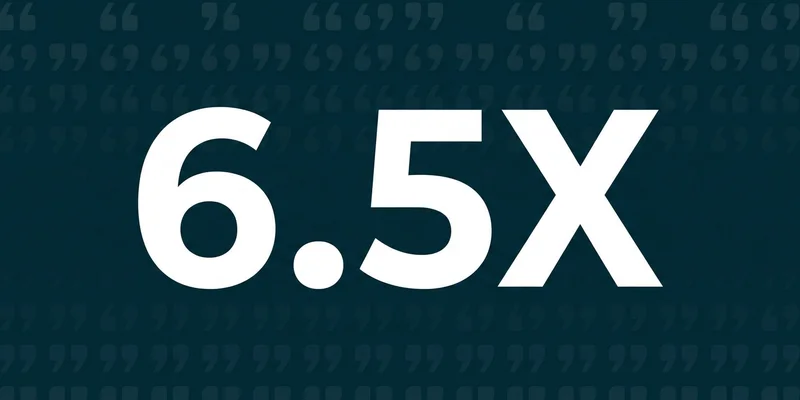
- ▹ Brands are 6.5x more likely to be cited through third-party sources than their own domains — listicles and reviews are the highest-leverage AEO tactic.
- ▹ A dedicated LLM info page grounds AI models with your positioning, credentials, and key facts.
- ▹ YouTube mentions show the strongest correlation with AI visibility across ChatGPT, AI Overviews, and AI Mode (2026 Ahrefs study).
- ▹ llms.txt files are the highest-ROI technical AEO tactic — tell AI crawlers your site structure in one file.
- ▹ The tactic stack: Foundation (Week 1), Infrastructure (Week 2-3), Citation Building (Ongoing), Social Proof (Ongoing).
01
Index_Structure
↓
Index_Structure
Beyond Keywords: What Actually Makes AI Cite You
Traditional SEO taught us to optimize for keywords. Answer Engine Optimization (AEO) works differently. AI models don’t just match strings — they evaluate entities, authority, and consensus across multiple sources.
This means the tactics that work for AEO often look nothing like traditional SEO. They’re about positioning, proof, and presence — not keyword density.
We analyzed the latest AEO research from 2026, including studies from Ahrefs, SE Ranking, Airops, and practitioner experiments. Here are the 7 tactics that consistently correlate with AI citation growth.
1. Own a Specific Positioning Line

AI models latch onto clear, repeated positioning. When multiple sources describe your brand the same way, the model treats that description as a fact.
The formula is simple:
[Brand] + [category] + [audience] or [problem] or [differentiator]
Examples from the real world:
- Salesforce: “CRM platform for the agentic enterprise” — repeated on their site, in partner listings, and on YouTube interviews
- HubSpot: “CRM platform that combines marketing, sales, and service in one app”
Define your positioning line, then reinforce it everywhere: your homepage, your social profiles, your partner pages, and every guest post you publish.
Why it works: LLMs form brand preferences through pattern repetition. When your positioning line appears consistently across multiple authoritative sources, the model treats it as a grounded fact rather than a guess.

2. Create an LLM Info Page
AI models will find information about your company from somewhere. If you don’t provide it, they’ll rely on third-party sources — which may be outdated, inaccurate, or include competitors.
An LLM info page (or “canonical proof page”) is a single page on your site that tells AI systems:
- Who you are and what you do
- Your specific positioning and differentiators
- Your founder and team credentials
- Key facts you want AI to know about you
Jayme Welch, CEO of Webvine Designs, calls this an “identity block that’s impossible to misread.” The page should be linked from your footer, your sitemap, and your llms.txt file.
Why it works: AI systems cite whatever sources they can treat as evidence. Your own site is the most controllable source. A dedicated proof page grounds the model so it doesn’t have to improvise with noisy third-party data.
3. Build a Help Center That Answers Every Specific Question
AI chatbots have changed how buyers research products. Instead of typing “CRM software” into Google, they ask ChatGPT: “Which meeting transcription tool integrates with Looker?”
That’s a very specific question. If nobody has answered it on the web, ChatGPT won’t have a source to cite.
Ethan Smith, CEO of Graphite, explains the approach: create help center articles for very specific user questions gathered from sales calls, support tickets, and customer interviews. Even obscure questions get answers — because if you’re the only citation, you get the recommendation.
The process:
- Pull questions from search console, sales transcripts, support tickets, and Reddit
- Use a query fan-out approach to identify every sub-question your audience might ask
- Create a help center article for each question
- Cross-link between articles to create an authoritative knowledge graph
Why it works: RAG systems retrieve the most relevant passage for a query. If your help center has the exact answer, you become the citation — and there’s often zero competition for these long-tail questions.
4. Get Cited on Third-Party Listicles and Reviews
This is the biggest AEO lever most brands ignore. According to a 2026 Airops study, brands are 6.5 times more likely to be cited through third-party sources than their own domains.
AI models trust consensus. When your brand appears in multiple listicles, review articles, and comparison posts, the model treats you as an authoritative option.
How to execute:
- Search ChatGPT/Gemini for your target query and note which sources get cited
- Identify which of those sources you can influence (listicles, comparison articles, educational posts)
- Reach out to authors with pre-written copy about your brand
- Offer value in return: link exchange, guest post, or sponsorship
Tools like query fan-out extractors can identify every sub-topic AI might explore when answering questions about your product. Target each sub-topic with a specific pitch to a relevant publisher.
5. Create YouTube Content for Your Niche
A 2026 Ahrefs study found that YouTube mentions show the strongest correlation with AI visibility across ChatGPT, AI Overviews, and AI Mode.
The reason is structural: YouTube is owned by Google, and most video formats mirror the exact queries users ask AI assistants — “best X for Y,” “X vs Y,” “how to use X,” “review of X.”
Two approaches:
- Your own channel: Create videos answering niche questions. Ethan Smith points out that B2B technical topics have very few video competitors — a huge opportunity.
- Partner with creators: Get interviewed on podcasts or ask creators to review your product. Each mention becomes a citation signal.
Optimize every video with keywords in title and description, clear timestamps, and accurate captions.
6. Leverage UGC: Reddit, Reviews, and Community
Social signals matter far more in AEO than SEO practitioners expect. Multiple 2026 studies confirm:
- Domains with Reddit and Quora mentions have 4x higher citation rates (SE Ranking)
- Profiles on Trustpilot, G2, Capterra correlate with 3x higher ChatGPT citation rates (SE Ranking)
- Reddit is among the most cited domains across ChatGPT, AI Overviews, and AI Mode (Ahrefs)
Action items:
- Claim your profiles on relevant review platforms (G2 for SaaS, Yelp for local, Trustpilot for everyone)
- Set up a founder profile on Reddit and contribute genuinely helpful answers
- Seed authentic customer stories in relevant threads when people ask for recommendations
- Create a G2 profile and actively collect reviews from clients
The goal is authentic, contextual mentions — never fake reviews or astroturfing. AI models can detect pattern manipulation.
7. Deploy an llms.txt File
Your llms.txt file is the single highest-ROI technical AEO tactic. It’s a standardized file (hosted at /llms.txt) that tells AI crawlers your site structure, priority pages, and key facts.
An effective llms.txt includes:
- A concise summary of your site (“who you are”)
- Links to your most important pages with brief descriptions
- Links to key source files (documentation, pricing, about page)
- Optional: key facts you want AI to remember about your brand
We maintain a comprehensive llms-full.txt at /llms-full.txt with full content for deep AI indexing. Learn more about the llms.txt specification.
Why it works: AI crawlers like GPTBot, GeminiBot, and PerplexityBot look for llms.txt as a starting point. A well-structured file ensures they index your most important content first, not random pages.
The Tactic Stack: How These Fit Together
These 7 tactics work as a system:
| Layer | Tactic | Timeline |
|---|---|---|
| Foundation | Positioning line + LLM info page | Week 1 |
| Infrastructure | llms.txt + Help center | Week 2-3 |
| Citation building | Third-party mentions + YouTube | Ongoing |
| Social proof | UGC / Reddit / Reviews | Ongoing |
Start with layer one this week. Your positioning line and LLM info page take an afternoon to create and they compound every tactic that follows.
For a complete automation system that monitors your AI citations and manages your AEO pipeline, explore the AI AEO 2026 Bundle.
From the Vault
// Frequently_Asked_Questions
What is the single most effective AEO tactic? ↓
Research shows brands are 6.5x more likely to be cited through third-party sources than their own domains. Getting mentioned in listicles, reviews, and comparison articles is the highest-leverage AEO move.
Do I need an llms.txt file for AEO? ↓
Yes. An llms.txt file tells AI crawlers your site structure and priority pages. It's a low-effort signal that significantly improves your chances of being indexed correctly by AI models.
How does YouTube help with AI citations? ↓
A 2026 Ahrefs study found YouTube mentions show the strongest correlation with AI visibility across ChatGPT, AI Overviews, and AI Mode. Creating niche B2B videos is a massive opportunity.
Should I create a dedicated LLM info page? ↓
Many AEO practitioners recommend a single canonical proof page that tells AI systems who you are, what you do, and why they should trust you. It gives AI a grounded source instead of relying on third-party noise.
// About_the_Author
SynthOperator Systems Team
AEO Strategy Lead
Specializing in answer engine optimization, entity authority, and AI citation strategies.