The Claude Ecosystem Master Guide: MCP, Subagents, Skills, and Beyond in 2026

SynthOperator Systems Team
Claude Ecosystem Engineer
Released
July 20, 2026
Duration
12 min read
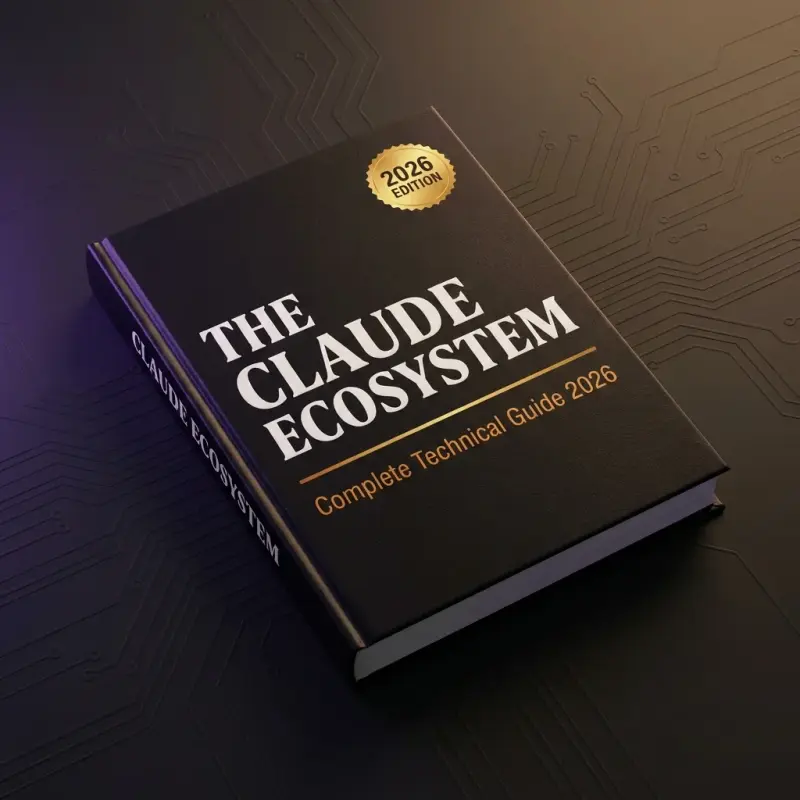
Complete technical breakdown of the Claude ecosystem in 2026. Master Claude Code, MCP servers, subagent architectures, memory hierarchies, and lifecycle hooks with production-ready blueprints.
// Key_Takeaways
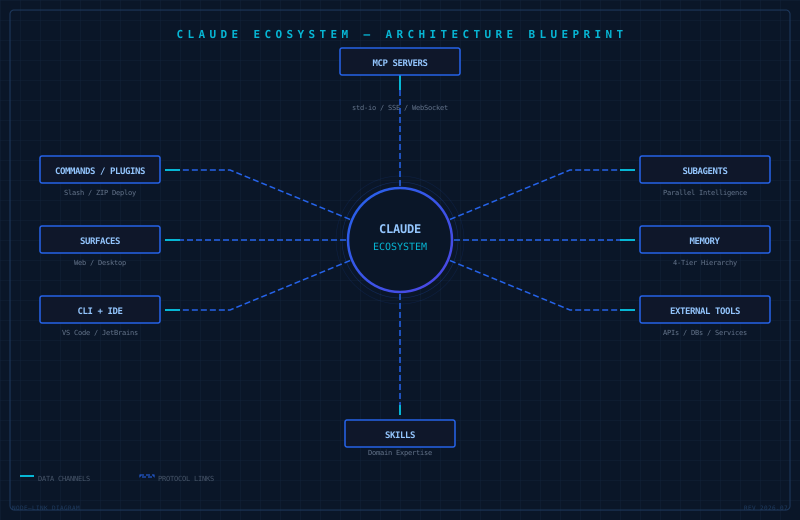
- ▹ Claude runs on five execution surfaces — Web, Desktop, CLI (most powerful for devs), VS Code, and JetBrains — each optimized for different workflows.
- ▹ MCP is the protocol layer connecting Claude to external tools; custom MCP servers unlock unlimited integrations.
- ▹ Subagent architecture enables parallel intelligence with lifecycle hooks, context isolation, and state resumption.
- ▹ Memory operates on four tiers: User (permanent), Project, Local (ephemeral), and Agent (per-subagent).
- ▹ Skills, Plugins, and Commands are three distinct extensibility mechanisms — not interchangeable.
01
Index_Structure
↓
Index_Structure
The Claude Ecosystem Is More Than a Chat Interface
Most developers interact with Claude through a single surface: the chat window. That’s like using a supercomputer as a calculator.
The full Claude ecosystem in 2026 spans five execution surfaces, four memory tiers, a protocol layer for tool integration (MCP), and a complete subagent architecture for parallel intelligence. Each layer is independently powerful; together, they form a production-grade engineering workforce you can deploy in minutes.
This guide gives you the full architectural map — not just what exists, but how the pieces connect and when to use each one.
The Five Execution Surfaces
Claude runs on five distinct surfaces, each optimized for different workflows:
-
Claude Web (claude.ai) — Enterprise Projects with artifacts, project memory, and custom API connectors. Best for research, analysis, and collaborative document work.
-
Claude Desktop — Local MCP configuration with filesystem access. Run Claude with direct access to your local tools and data.
-
Claude Code (CLI) — Interactive agentic loop in your terminal. The most powerful surface for developers, supporting Plan Mode, CI/CD integration, and full subagent orchestration.
-
VS Code Extension — Claude Code integrated into your editor with inline edits, diagnostics, and test generation.
-
JetBrains Plugin — Same Claude Code capabilities inside JetBrains IDEs.
The Model Context Protocol (MCP)
MCP is the infrastructure layer that connects Claude to external tools and data sources. It’s a client-server protocol where:
- MCP Servers expose specific capabilities (filesystem access, database queries, API integrations, web scraping)
- MCP Clients (Claude Desktop, Claude Code) connect to these servers and route tool calls
- Transports handle communication via stdio (local) or SSE (remote)
Custom MCP server development using Node.js or FastMCP is covered in depth in our Claude Ecosystem Master Guide, which includes production-ready server configurations.

Subagent Architecture
As covered in our Claude Code Subagents article, subagents are the execution layer of the Claude ecosystem. The ecosystem guide provides the complete YAML frontmatter reference for subagent definitions, including:
- Lifecycle hook management (PreToolUse, PostToolUse, Stop, PreCompact, PostCompact)
- Context isolation patterns
- State resumption across sessions
- Parallel execution orchestration
The Memory Hierarchy
Claude’s memory system in 2026 has four tiers:
| Tier | Scope | Persistence |
|---|---|---|
| User Memory | Cross-session preferences | Permanent |
| Project Memory | Project-level context | Per-project |
| Local Memory | Current session | Ephemeral |
| Agent Memory | Subagent-specific | Per-agent lifecycle |
The experimental Dreaming feature enables offline memory consolidation — Claude processes and summarizes past sessions during idle time, reducing context window pressure.
Skills vs. Plugins vs. Commands
One of the most confusing aspects of the Claude ecosystem is understanding what each extensibility mechanism does:
-
Skills: Reusable cognitive systems that teach Claude a specific domain expertise. These are the foundation of our Claude Skills framework and are deployable across all surfaces.
-
Plugins: ZIP packages that bundle skills, configurations, and assets for one-click deployment. The Claude Agents Pro vault contains 300+ pre-configured plugins.
-
Commands: Slash commands that trigger specific behaviors within Claude Code. Can be custom-defined in your CLAUDE.md configuration.
Production-Grade Agent Examples
The ecosystem guide includes complete blueprints for professional agents:
- CEO Agent: Strategic planning, decision frameworks, and executive analysis
- Meta Ads Agent: Campaign analysis, creative review, and performance optimization
- CRO Agent: Conversion funnel audit, A/B test design, and UX recommendations
- WordPress Deployment Agent: Automated site deployment, plugin management, and security hardening
These agents combine Skills (domain expertise), Subagents (parallel execution), and MCP (tool access) into unified production systems.
Why You Need the Technical Deep Dive
The public Claude documentation covers the basics. The Claude Ecosystem Master Guide goes deeper:
- Interactive HTML with copy-paste code blocks for active implementation
- Print-ready PDF for offline study and team distribution
- 17 chapters covering every surface, protocol, and agent pattern
- Custom schemas and scripts that save hours of trial and error
It’s the technical reference that sits on your desk while you build.
Master the full Claude ecosystem. Get the double-format guide.
From the Vault
// Frequently_Asked_Questions
What is the Claude Ecosystem? ↓
The Claude ecosystem encompasses five execution surfaces (Web, Desktop, CLI, VS Code, JetBrains), the Model Context Protocol (MCP) for tool integration, subagent architecture for parallel intelligence, and a four-tier memory system.
How does MCP differ from traditional API integration? ↓
MCP is a standardized client-server protocol that allows Claude to dynamically discover and use tools, whereas traditional API integration requires custom code for each endpoint.
What are Claude Skills? ↓
Skills are reusable cognitive systems that teach Claude specific domain expertise. They combine instructions, memory patterns, and tool configurations into deployable units.
Which Claude surface is best for developers? ↓
Claude Code (CLI) is the most powerful surface for developers, supporting Plan Mode, CI/CD integration, full subagent orchestration, and the widest range of MCP server connections.
// About_the_Author
SynthOperator Systems Team
Claude Ecosystem Engineer
Specializing in Claude Code architecture, MCP server development, and production-grade agent systems.